Taiwan Casino Floor: Are Casinos Legal?
Taiwan's casino floor exists in a bizarre legal gray zone that confuses even seasoned industry operators. The answer is brutally simple: casino gambling is illegal on the main island, but a special exception carved into law allows casinos on offshore islands — specifically Penghu, Kinmen, and Matsu — provided local referendums approve them. As of now, no offshore island has successfully passed such a referendum, meaning the entire Taiwan casino floor remains a phantom. 🎰
This is not a minor regulatory footnote. It is the single most important fact for anyone auditing hardware deployments, algorithmic game integrity, or cross-border betting operations in the region. The Taiwan casino floor as a physical, regulated entity does not exist on paper or in practice. What exists instead is a wildly active underground market, offshore server farms, and a legal framework that punishes operators with up to three years in prison for running unlicensed games.
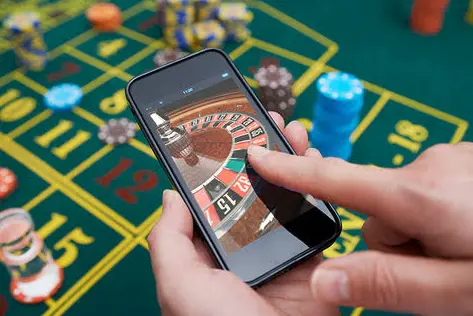
The Offshore Referendum Loophole That Never Fired
Article 10-2 of the Offshore Islands Development Act permits casino gaming only after a local referendum passes. Penghu held a vote in 2009 and again in 2016. Both failed decisively. Kinmen and Matsu have never even scheduled a serious vote. The result? A legal mechanism that theoretically allows a Taiwan casino floor but practically guarantees none will open. For hardware suppliers and algorithm auditors, this means every gaming terminal shipped to Taiwan for "casino use" is either destined for illegal underground rooms or re-exported to Macau, Singapore, or Manila.
The enforcement angle is equally nasty. Taiwan's Criminal Code Article 266 punishes gambling with fines up to NT$50,000. Article 268 targets operators with up to three years imprisonment. Police regularly raid illegal mahjong parlors and underground card rooms, but the real action has migrated to offshore digital platforms. These sites accept Taiwanese players, run on servers in Curaçao or Cyprus, and offer live dealer feeds that mimic a physical Taiwan casino floor without any legal presence on the island.

Hardware Forensics and the Digital Migration
From a hardware audit perspective, the Taiwan market is a ghost town for legitimate casino floor equipment. No licensed slot machines. No regulated table game terminals. No central monitoring systems approved by a gaming authority. The few machines that exist are either in private clubs operating under "social gaming" exemptions or in illegal rooms that shuffle hardware every 72 hours to avoid seizure. 😤
Algorithmic integrity is even worse. Offshore platforms targeting Taiwanese players use random number generators that have never been audited by any recognized testing lab. Payout rates are set arbitrarily, often between 82% and 91%, far below the 95%+ standard required in regulated jurisdictions. The lack of a legal Taiwan casino floor means there is no baseline for fairness, no dispute resolution mechanism, and no enforcement against rigged games.
The Cross-Border Tourism Gambit
Taiwanese high rollers do not stay home. They fly to Macau, Singapore, Manila, and increasingly to Cambodia's Sihanoukville and Myanmar's border casinos. This outbound flow is the real economic driver behind repeated attempts to legalize a local Taiwan casino floor. Proponents argue that a regulated resort in Penghu or Matsu would capture that spending and create thousands of jobs. Opponents counter that any casino would fuel money laundering, loan sharking, and organized crime infiltration. 🎲
The referendum math is brutal. Penghu's 2016 vote failed by a margin of 81% to 19%. That is not a close call. It is a landslide rejection. Any future attempt would need to overcome decades of cultural aversion to gambling, a powerful anti-casino coalition, and the simple fact that most Taiwanese voters view casinos as a threat to social order, not an economic opportunity.
What Actually Exists on the Ground
Walk through Taipei's Ximending district or Kaohsiung's night markets and you will find claw machines, arcade games, and lottery kiosks. You will not find a single legal casino floor. The only "casino" branded venues are either private membership clubs operating in legal gray areas or underground rooms hidden behind restaurant facades. Police raids occur weekly. Hardware is seized and destroyed. Operators are prosecuted under Article 268.
For anyone researching the Taiwan casino floor, the brutal truth is this: it does not legally exist, it has never legally existed, and the referendum mechanism that could create it has failed every time it has been tested. The real action is offshore, unregulated, and algorithmically opaque. 🃏